Drywall installation
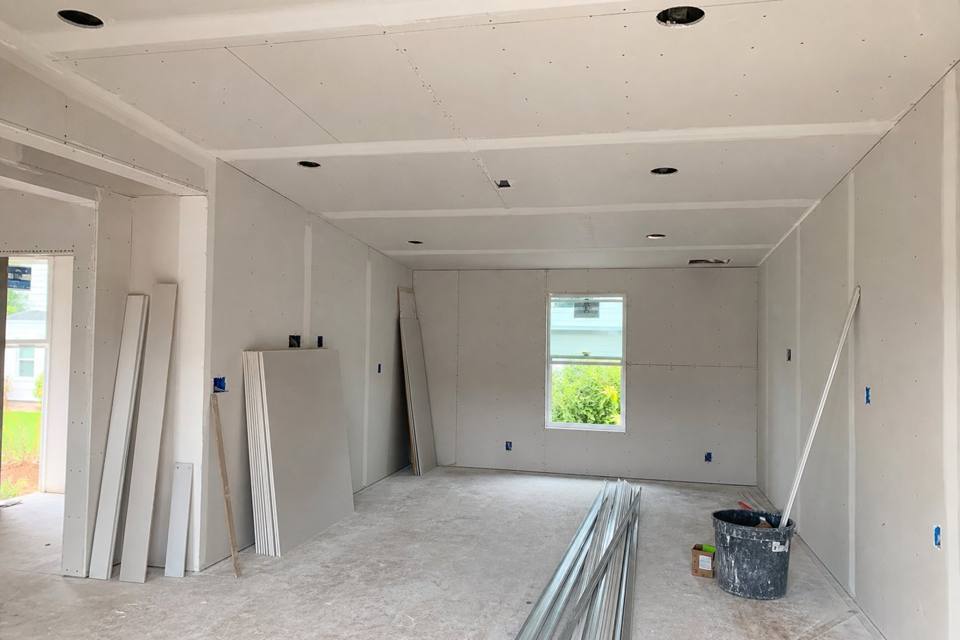
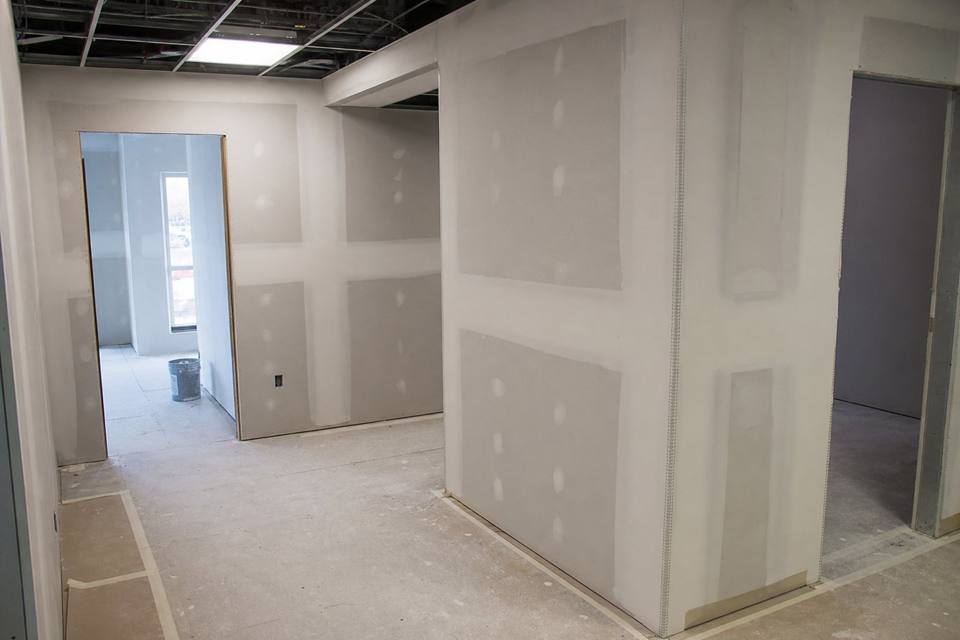
New drywall should hang flat, break cleanly on framing, leave neat openings around doors and windows, and give the finisher a solid surface to tape, mud, sand, and prime.
Residential & commercial drywall · Daytona Beach, FL
If a wall, ceiling, remodel opening, or texture patch is bothering you, you do not need to diagnose it before reaching out. Daytona Beach homeowners and businesses often call about ceiling stains, cracked seams, garage conversions, rental turnovers, new room buildouts, and older texture that needs to blend cleanly after paint. Call or use the short form and a drywall professional can help narrow the next step.
Problems we handle
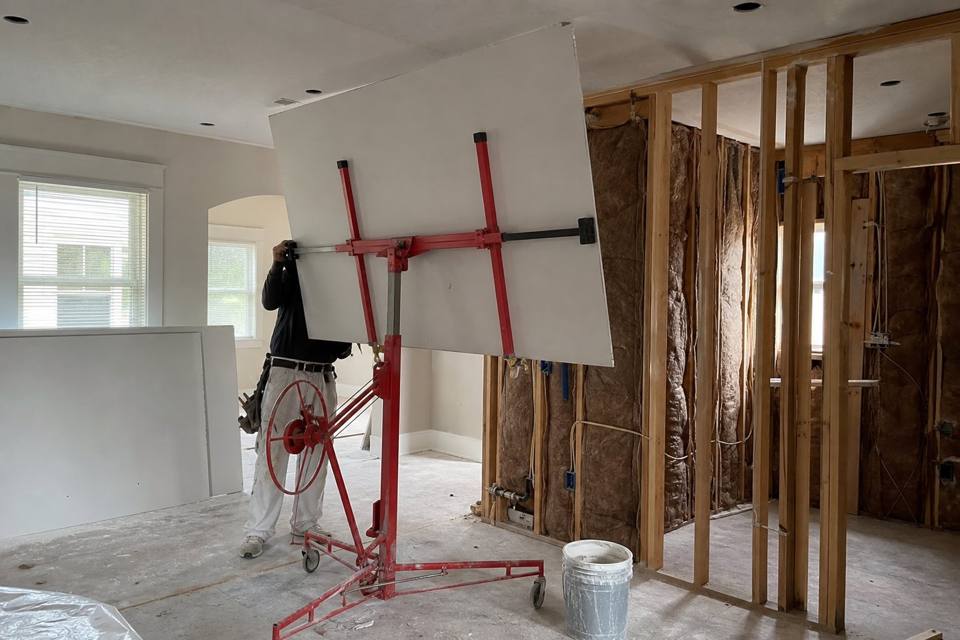
Finished drywall should leave you with flat walls, straight corners, clean ceiling lines, blended texture, and surfaces that are ready for primer and paint. The right next step may be a small patch, a ceiling repair, new sheetrock, texture matching, or finish work after a remodel.
In Daytona Beach, drywall projects often involve humidity, remodel openings, ceiling stains, garage conversions, rental turnovers, commercial suite changes, and older texture that needs to blend in strong natural light. You can call even if you are not sure which service category fits the problem, how serious it is, or whether it needs repair, replacement, or finishing work.
New drywall should hang flat, break cleanly on framing, leave neat openings around doors and windows, and give the finisher a solid surface to tape, mud, sand, and prime.
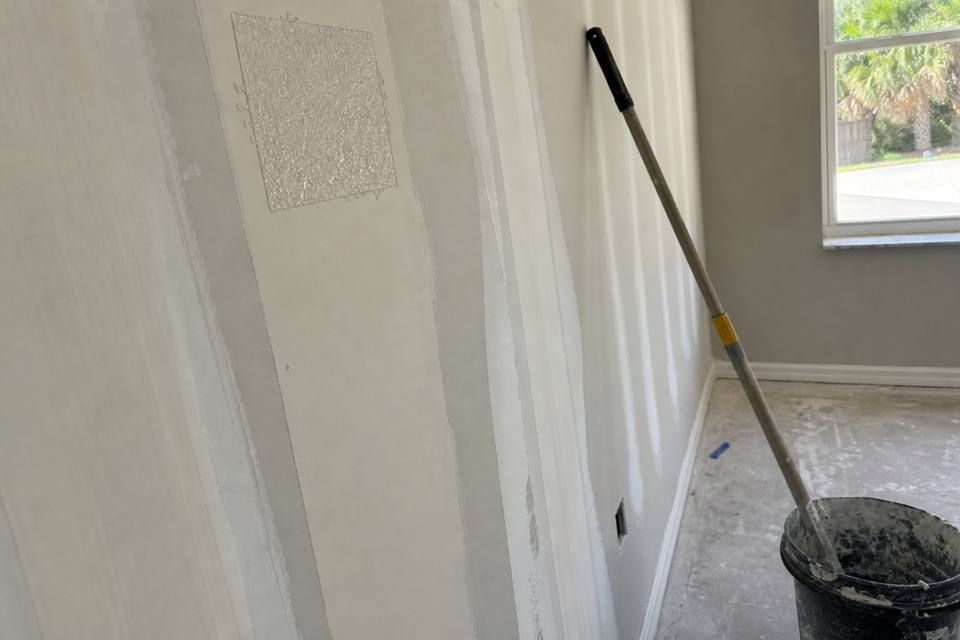
Sheetrock hanging is where straight walls begin. Panel layout, screw spacing, butt joints, inside corners, outside corners, and ceiling transitions all affect how clean the finished room looks.
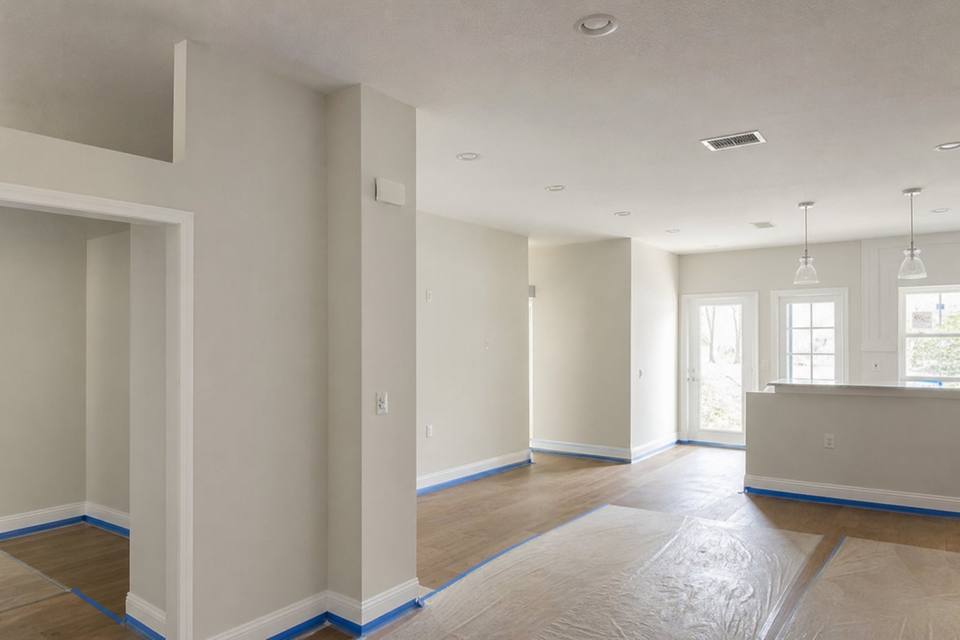
Finishing turns raw board into a paint-ready surface. Tape, mud, corner bead, sanding, and touch-up work should leave seams quiet after primer and paint.
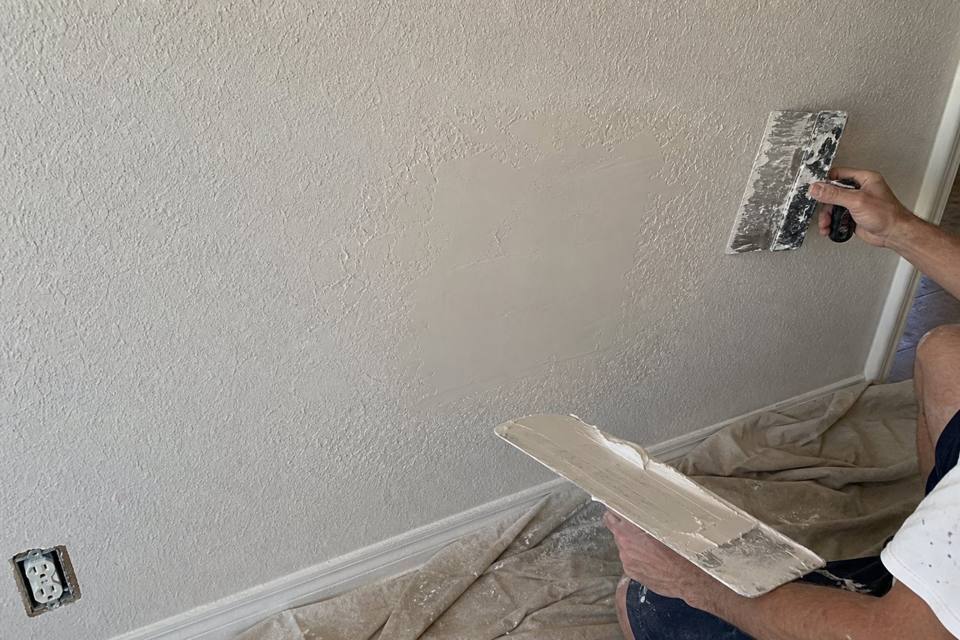
Texture work should blend into the room instead of advertising the patch. Orange peel, knockdown, smooth finish, and skip trowel each need a different hand.
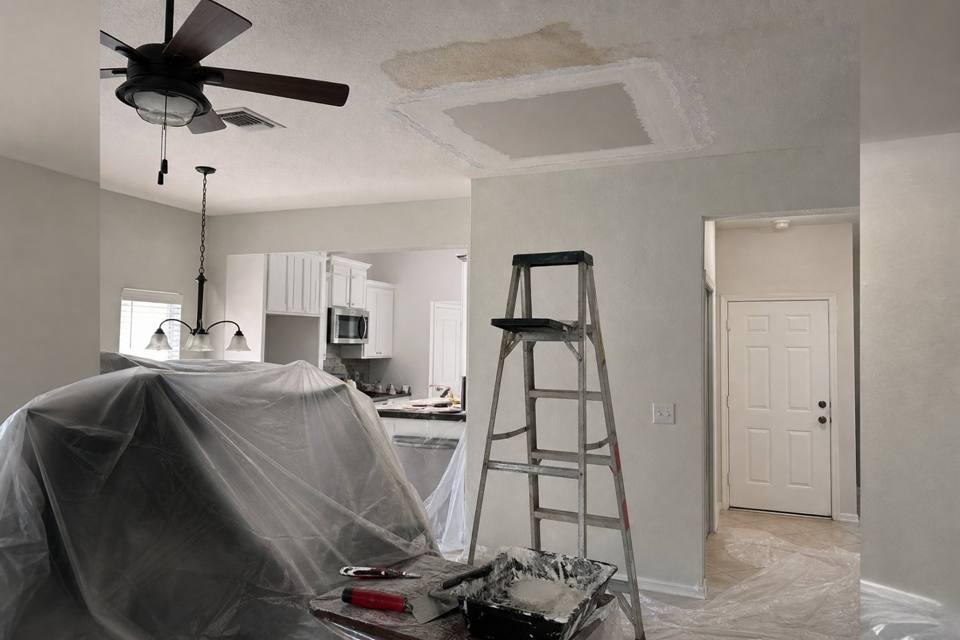
Ceiling drywall should be fastened, taped, sanded, and blended carefully where it meets walls, soffits, lights, fans, and vents. This image shows a repair area before sanding, texture, and paint.
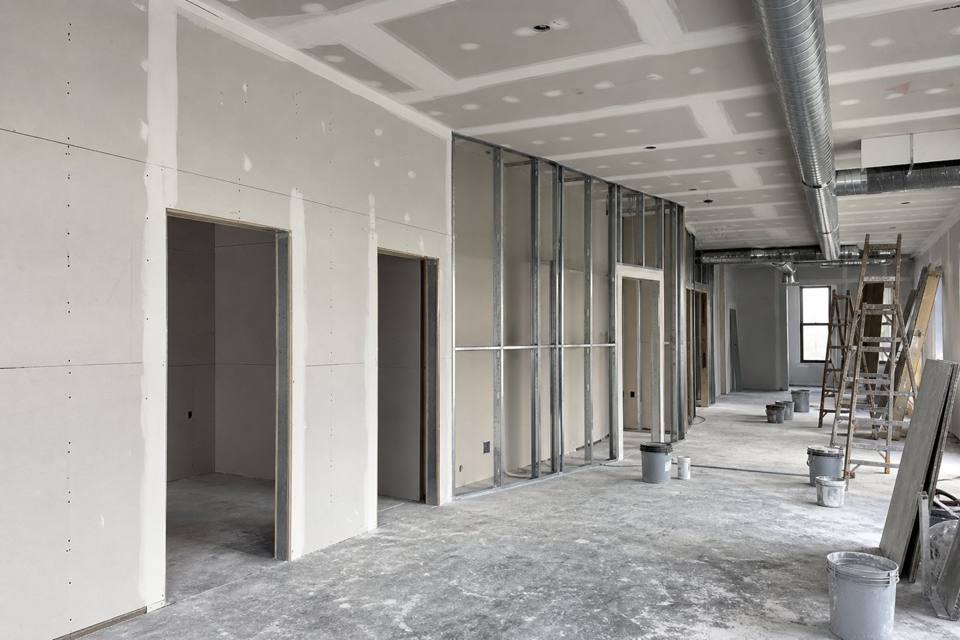
Commercial drywall work needs durable corners, clean partitions, reliable finish quality, and practical scheduling for offices, retail suites, rentals, and tenant improvements.
Cost and scope
Panel type, thickness, wall height, ceiling span, and room use affect how drywall should be hung and finished.
Paper tape, mesh, setting compound, topping compound, inside corners, outside bead, and sanding control the final surface quality.
Texture choice changes labor, blending, wall appearance, and how much touch-up is visible after paint.
Ceilings need careful fastening and work when stains, soft board, sagging, or prior leaks are involved.
Repair or replacement
Uneven framing, crowded openings, ceiling transitions, and small offcuts can create seams in the wrong places. Better layout produces cleaner walls.
Strong side light, large windows, dark paint, and smooth walls can reveal seams that would be hidden on a textured wall.
Texture should match the surrounding surface before paint starts. Sanding dust, raised edges, and heavy spray texture can all show through later.
When to call
Stains may need damaged board removed, insulation checked, texture blended, and the source corrected before the ceiling is closed and painted.
Fastener movement and seam ridges can return if the area is only skimmed lightly. The repair should address attachment and finish so the same spot does not return.
Hard patch lines, raised mud, and poorly blended texture make a repair obvious. Better feathering and texture control help the wall disappear after paint.
Soft gypsum, stained paper, swelling, and recurring moisture need work before new compound or paint goes over the area.
Where we help
Daytona Drywall Repair serves Daytona Beach, Ormond Beach, Port Orange, Holly Hill, South Daytona, New Smyrna Beach, and nearby Volusia County areas. Homes, condos, offices, retail spaces, garages, additions, and remodel projects each need drywall work that fits the property and the finish expectation.
Pricing depends on the room size, ceiling height, board count, finish level, texture, access, moisture damage, and whether the work is new installation, finishing, or repair. Those factors can be discussed after you make contact; you do not need every measurement ready before calling.
Easy next step
You can mention the room, the visible damage, a ceiling stain, a bad patch edge, a new wall opening, or a texture mismatch. You do not need measurements or a diagnosis before reaching out.
A drywall professional can help narrow whether the next step sounds like repair, replacement, hanging, finishing, texture blending, or an in-person look at the area.
From there, the follow-up can cover access, timing, finish expectations, and any details needed to discuss pricing or schedule the work. You can start with a simple description instead of preparing a full project packet first.
Common questions
Sometimes only the damaged board or stained section needs removal, but the moisture source, soft gypsum, insulation condition, and existing texture should be considered before the ceiling is closed and blended.
Visible patches usually come from hard mud edges, texture that does not match the surrounding wall, poor sanding, different primer coverage, or lighting that catches the repair at an angle.
You can simply describe the room, the visible damage, whether the surface is smooth or textured, and whether moisture was involved. A drywall professional can use that starting point to narrow the likely next step.
Condos, rentals, and coastal properties can involve access windows, association rules, elevator or parking constraints, humidity, and turnover timing, so those details can be discussed during follow-up.
It can often be blended, but the surrounding texture, paint age, lighting, and size of the patch affect how invisible the repair will look once primer and paint are applied.
Replacement may be better when board is soft, swollen, mold-suspect, badly sagging, repeatedly cracked, or damaged behind the surface. A skim coat is better suited to solid drywall with surface-level finish issues.
Tell us what you are seeing in plain language. You can ask about a wall repair, ceiling patch, new drywall, texture blend, or finish issue without preparing measurements or diagnosing the cause first.
Send Drywall Project Details